Worried about Flock cameras? All new cars in the EU now need to have a camera aimed at the driver's face in the latest privacy nightmare
- The EU's General Safety Regulation is set to be expanded
- Driver Distraction Warning systems will need to be fitted to new cars
- Privacy advocates are already voicing data concerns
As of this week, the European Commission has stated that all new vehicles registered in the European Union will have to be fitted with Advanced Driver Distraction Warning (ADDW) systems to comply with new, more stringent safety legislation.
While European roads are among the safest in the world, the European Commission said in its announcement that "the number of deaths and injuries from road accidents is still too high." As a result, it is set to expand its General Safety Regulation to include several new requirements.
Among the new requirements are advanced emergency braking systems that detect pedestrians and cyclists, as well as "better forward vision" and camera-based driver distraction technology that audibly warns drivers to pay attention to the road.
Many new cars already feature this technology, which uses a small camera mounted behind the steering wheel or somewhere above the infotainment system in the center of the dashboard.
Constantly active, the system monitors the driver's eyes and facial expressions, intervening if it detects that the driver is looking away from the road for too long.
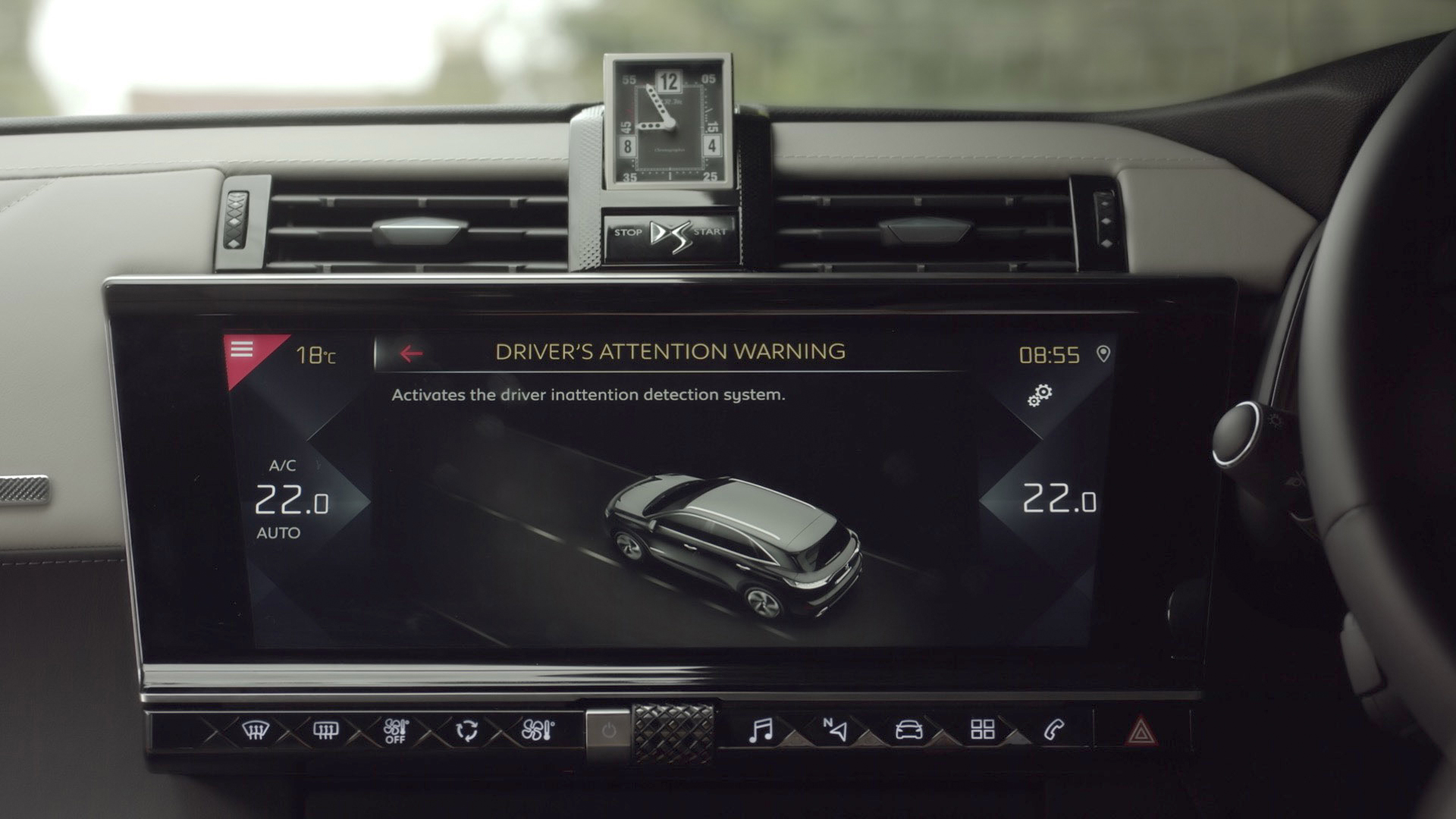
Today's manufacturers' systems range from audible bleeps and on-screen safety notifications when it detects distraction, to the deactivation of automated cruise control and other functions.
Critics have already hit out at the decision, with the European Conservative describing the commission's move as the "latest annoying piece of EU overregulation," which arrives with little clarification on how the data will be handled.
These ADDW systems should operate in a closed-loop system, where all data is processed locally in the car and never uploaded to any third-party server.
However, since April 2018, all newly approved passenger cars and light vans in the EU have been required to include an eCall emergency system that automatically contacts emergency services in the event of a serious crash.
This, coupled with the fact that consulting firm McKinsey predicts that 95% of all vehicles will be connected to the internet by 2030, means it isn't a huge stretch to think that driver-monitoring data could eventually leave the vehicle.
Analysis: a data privacy nightmare
Analysis by Mozilla in 2023 examined the privacy policies of 25 car brands and found that every single one failed to meet its own privacy and security standards. Mozilla concluded that cars were "the worst product category we have ever reviewed for privacy."
In 2024, the Texas Attorney General opened an investigation into several automakers following reports that they had been collecting large amounts of driver data and selling it to third parties.
As the European Conservative points out, there is currently very little clarity from the EU over how driver data is handled, meaning there is the potential for these systems to eventually help determine insurance premiums or act as evidence in a court of law, for example.
Beyond this, ADDW technology can also prove extremely distracting when implemented poorly.
I've lost count of how many times a system has warned me to pay attention when all I'm doing is trying to find a simple function in a baffling series of touchscreen menus.
On the one hand, Euro NCAP says it will target "annoying" safety tech, but on the other, the European Union is mandating greater reliance on these systems. Now is a confusing time to be a motorist.
via Hosting & Support
Comments
Post a Comment