
The closest thing to C-3PO can be yours – if you have $16,000

Web Hosting & Remote IT Support

Unitree G1 humanoid robot has speed, agility, and a slightly haunting faceless head – and it can be yours for $16,000.

The G1 is the more polished and accomplished follow-up to Unitree's H1 humanoid, a robot I saw doddering around like an old man at CES 2024. That bot walked slowly but remained upright even when Unitree developers delivered a kick to its stiff back. G1, by contrast, is more flexible and faster than its predecessor. It might even be able to run away from that kick.

In a recently released YouTube video (below), G1 gets up from a prone position, walks, runs, climbs stairs, and handles getting punched and kicked. It then settles onto a couch, rotates its arms and legs 360 degrees, and folds its 77-pound, 4-ft. tall body into a small, carryable size (a developer does come along and hoists G1 over his head). It even engages in a bit of krav maga stick work, which I believe demonstrates how it uses imitation and reinforcement training to learn new skills.
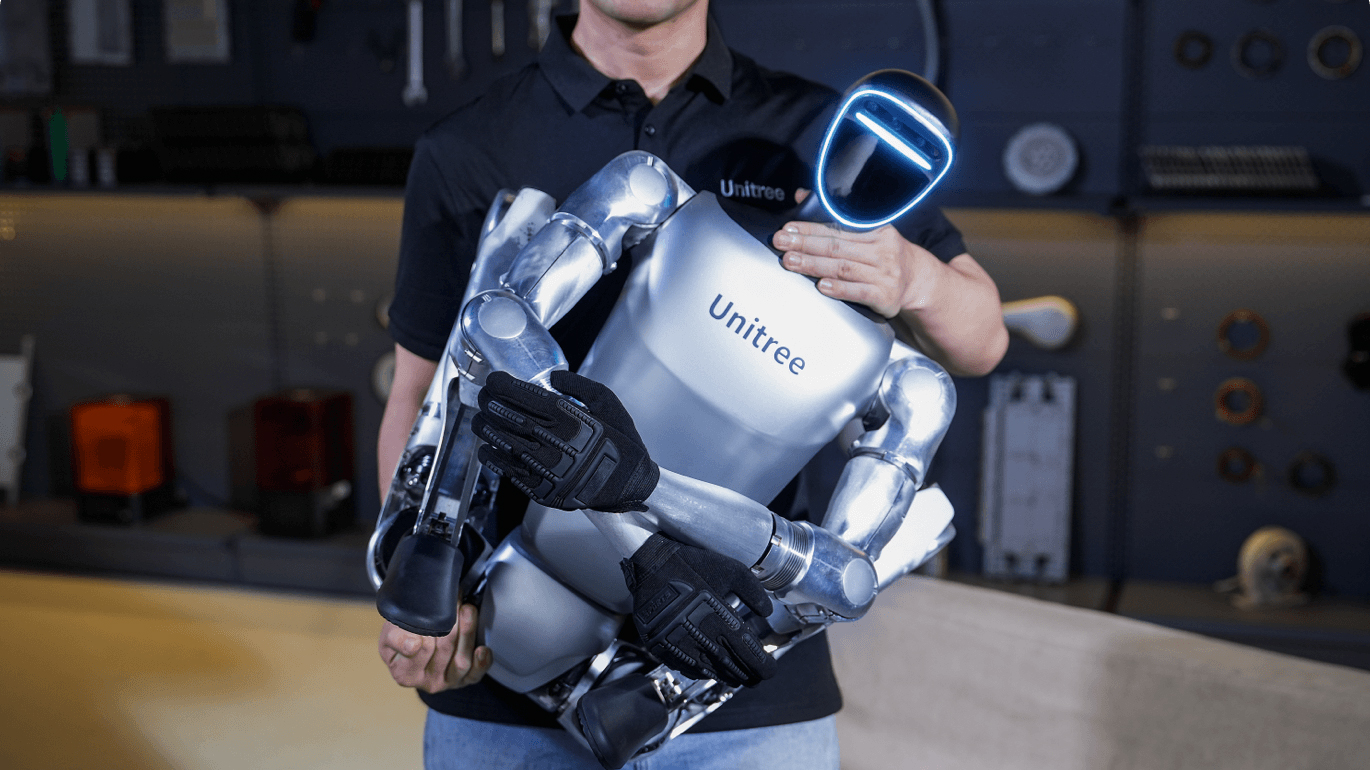
Unitree G1

(Image credit: Unitree)

While Unitree G1 has LiDAR scanners built into its head, it lacks a face. It also doesn't ship with hands, but you can purchase a pair of three-fingered dextrous hands that can be used, at least according to the video and Unitree website, to crack walnuts, forcefully open a bottle of Coke, cook, and delicately solder electronics.

The specs promise two hours of battery life, but there's no indication it can recharge on its own, a skill I can expect even from the most run-of-the-mill iRobot Roomba robot vacuum.

For all its skill, the Unitree G1 is not intended as a home robot. The fine print in the announcement video states, "The humanoid robot has a complex structure and extremely powerful power. Users are asked to keep a sufficient safe distance between the humanoid robot and the humanoid robot. Please use with caution." 

Yes, it appears there's an error in that statement since one assumes it might be completely safe to leave G1 alone with another G1 but not with your kids.
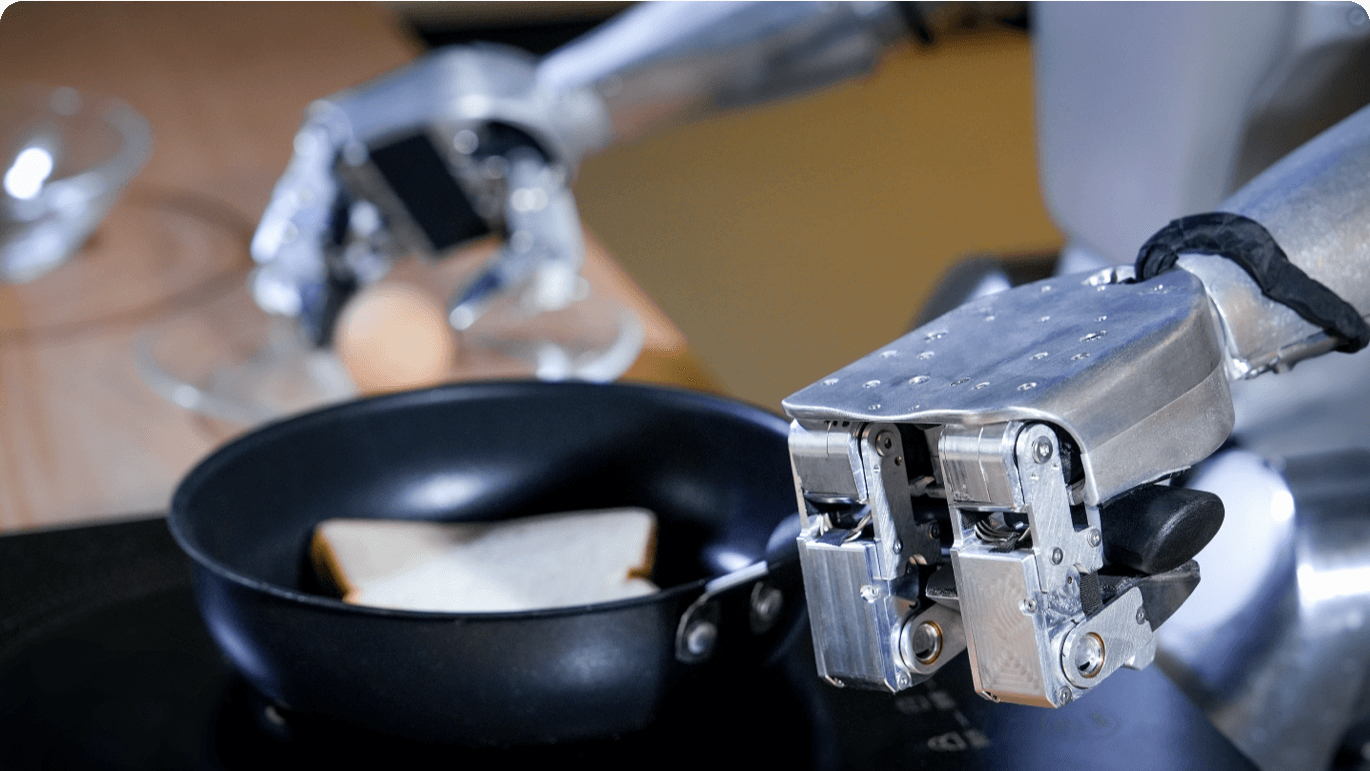
Unitree G1

(Image credit: Unitree)

The video also notes that some of the skills featured are still under development. Between that and the fact you have to pay extra with the dextrous gripping hands, it's not clear exactly what you'd get if you have a spare $16,000 lying around.

The good news is that Unitree made significant progress from the H1 robot, and at this pace, there's a solid chance that by 2025, the next G1 will be cheaper, safer, and far more capable.

Maybe now's the time to start saving up.

You might also like


via Hosting & Support

Comments

Popular posts from this blog

Microsoft, Google, and Meta have borrowed EV tech for the next big thing in data centers: 1MW watercooled racks

Web Hosting & Remote IT Support Liquid cooling isn't optional anymore, it's the only way to survive AI's thermal onslaught The jump to 400VDC borrows heavily from electric vehicle supply chains and design logic Google’s TPU supercomputers now run at gigawatt scale with 99.999% uptime As demand for artificial intelligence workloads intensifies, the physical infrastructure of data centers is undergoing rapid and radical transformation. The likes of Google, Microsoft, and Meta are now drawing on technologies initially developed for electric vehicles (EVs), particularly 400VDC systems, to address the dual challenges of high-density power delivery and thermal management. The emerging vision is of data center racks capable of delivering up to 1 megawatt of power, paired with liquid cooling systems engineered to manage the resulting heat. Borrowing EV technology for data center evolution The shift to 400VDC power distribution marks a decisive break from legacy sy...

Google’s AI Mode can explain what you’re seeing even if you can’t

Web Hosting & Remote IT Support Google’s AI Mode now lets users upload images and photos to go with text queries The feature combines Google Gemini and Lens AI Mode can understand entire scenes, not just objects Google is adding a new dimension to its experimental AI Mode by connecting Google Lens's visual abilities with Gemini . AI Mode is a part of Google Search that can break down complex topics, compare options, and suggest follow-ups. Now, that search includes uploaded images and photos taken on your smartphone. The result is a way to search through images the way you would text but with much more complex and detailed answers than just putting a picture into reverse image search. You can literally snap a photo of a weird-looking kitchen tool and ask, “What is this, and how do I use it?” and get a helpful answer, complete with shopping links and YouTube demos. AI Eyes If you take a picture of a bookshelf, a plate of food, or the chaotic interior of your junk...

The Oscars’ new AI rule provides a tentative green light for generative tech in movies

Web Hosting & Remote IT Support Ahead of the 98th Oscars ceremony, scheduled for March 2026, the Academy of Motion Picture Arts and Sciences has made its first official rule regarding the use of generative AI in films. This follows a controversial 2024 season that saw Best Picture finalist The Brutalist (and, to a lesser extent, co-nominee Emilia Perez ) come under fire for its use of AI to alter actor performances and create architectural drawings. As recommended by the Academy’s Science and Technology Council, this new rule states: "With regard to Generative Artificial Intelligence and other digital tools used in the making of the film, the tools neither help nor harm the chances of achieving a nomination. The Academy and each branch will judge the achievement, taking into account the degree to which a human was at the heart of the creative authorship when choosing which movie to award." The new guidelines come alongside three other notable rule changes and add...