
New ChromeOS update for Chromebooks makes it feel more like Android

Web Hosting & Remote IT Support

Google is officially rolling out ChromeOS 117 to a Chromebook near you. With this update, the tech giant is blurring the lines between Chromebooks and Androids as the former now adopts a Material You redesign.

The system isn’t getting a total rework as the patch only affects certain areas like the Quick Settings menu. On there, you’ll see items are now encased in large rounded rectangles instead of circles. There are buttons for activating Wi-Fi, Bluetooth, and Cast Screen among other things. Google states in its announcement post that it strived to have “less pagination” by putting everything into one compact space. 

What you see in the new Quick Settings depends on the type of Chromebook you own plus what software is installed. For example, on 9To5Google’s report, there’s an entry for a VPN. On our Chromebook Spin 714, there was an option for the Accessibility features. 
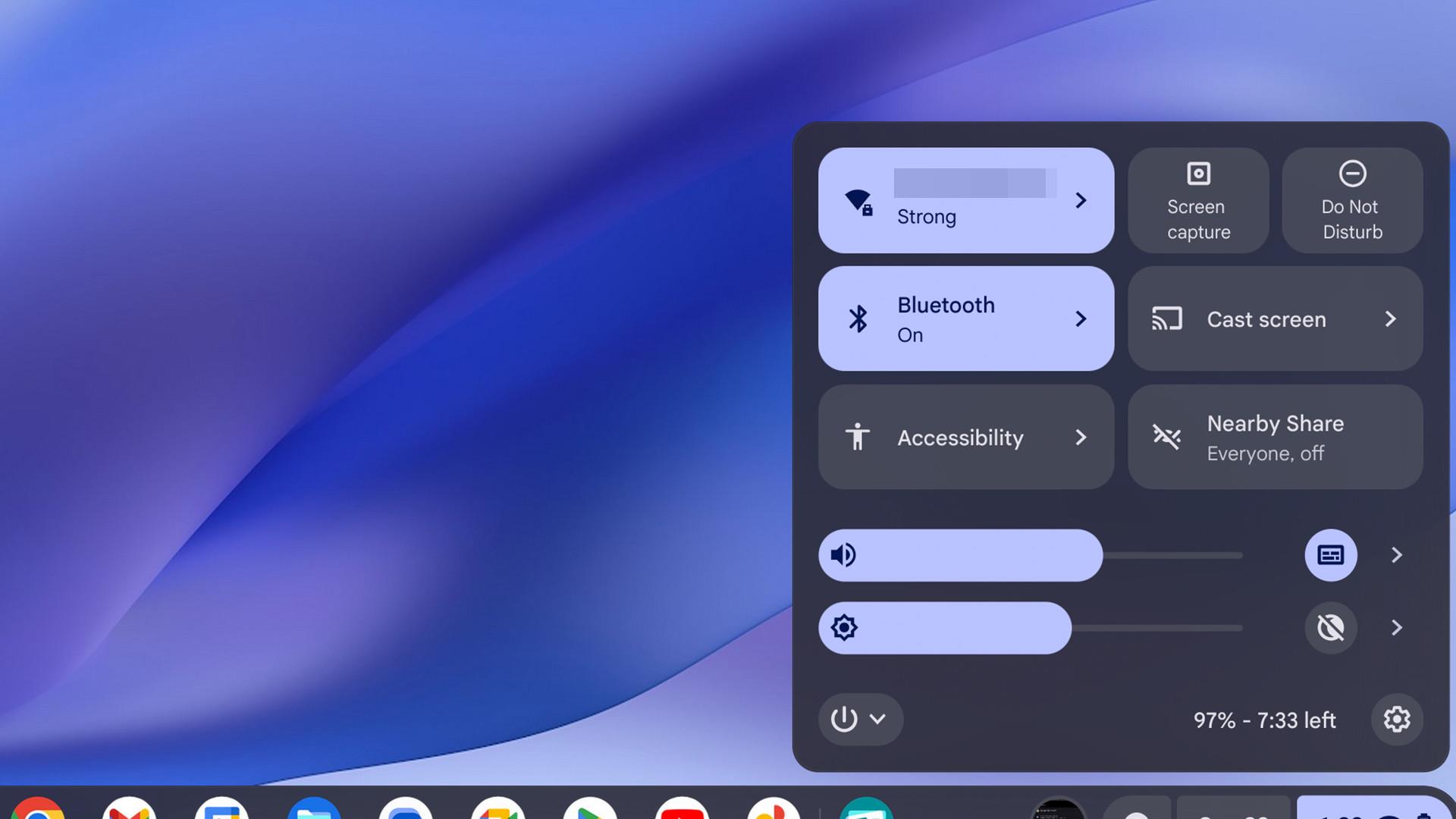
Chromebook with Material You redesign

(Image credit: Future)

It’s important to note that both the volume and brightness sliders are much larger than before, making it easier to drag them on a Chromebook’s touchscreen. Next to them are two new tools. The top icon is for Audio. It’s where you can tweak the input and output for the microphone port and speakers, respectively. It’s also where you can activate Live Captions. Below that is for configuring the display. You can activate the Dark Theme on there or manually turn on the night light. 
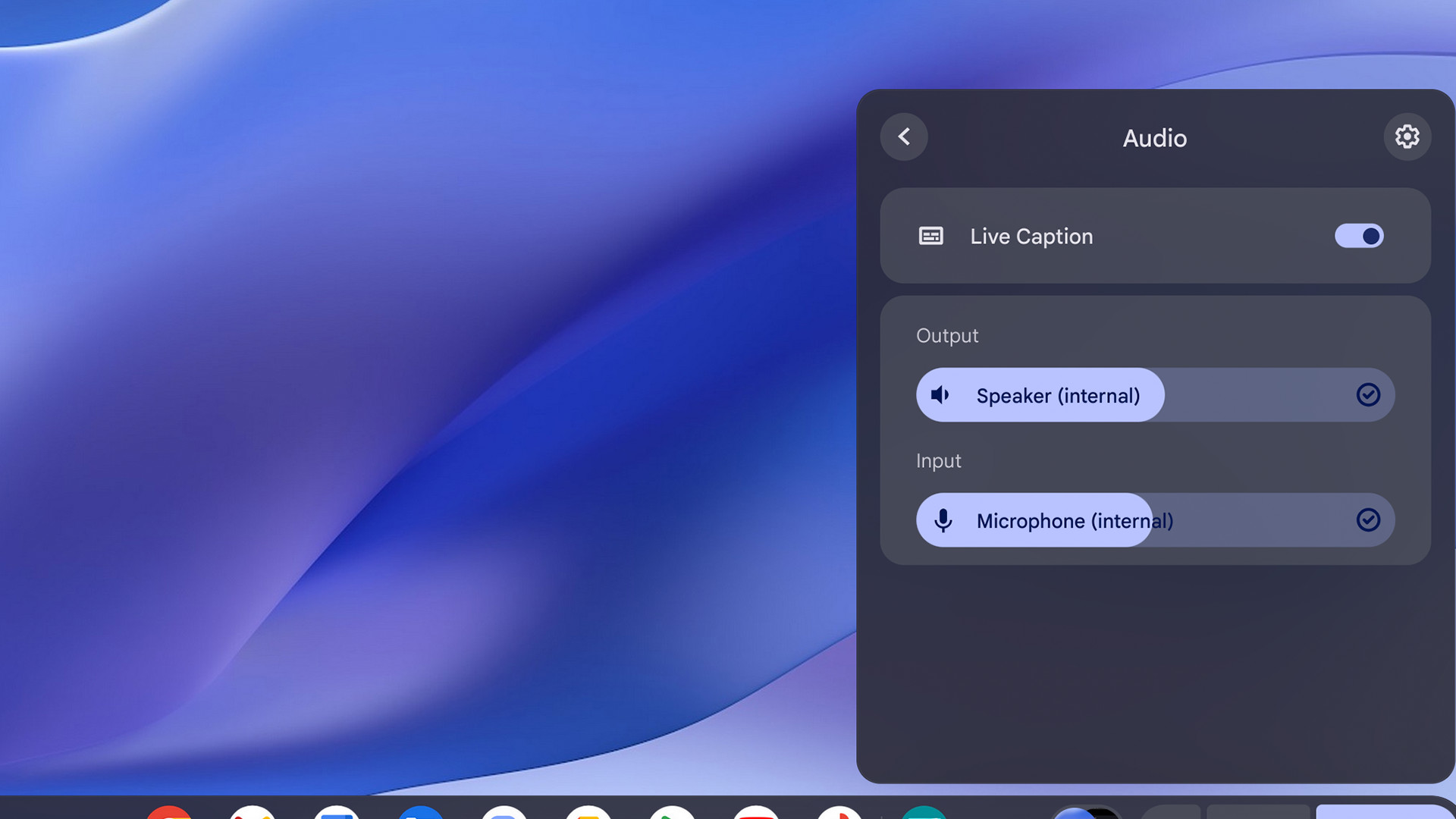
Chromebook Audio settings redesigned

(Image credit: Future)

Dynamic coloring

Next, Dynamic Color theming is being implemented. This allows users to choose from “one of four accent colors” based on whatever wallpaper you have for a bit of extra flair. These also adapt to your laptop’s light or dark theme. Or you can turn it off for “more basic neutral colors”. The theming changes can be found by opening the Settings menu then clicking the Personalization section. Scroll down until you find “Set your wallpaper & style”. It’s right there.
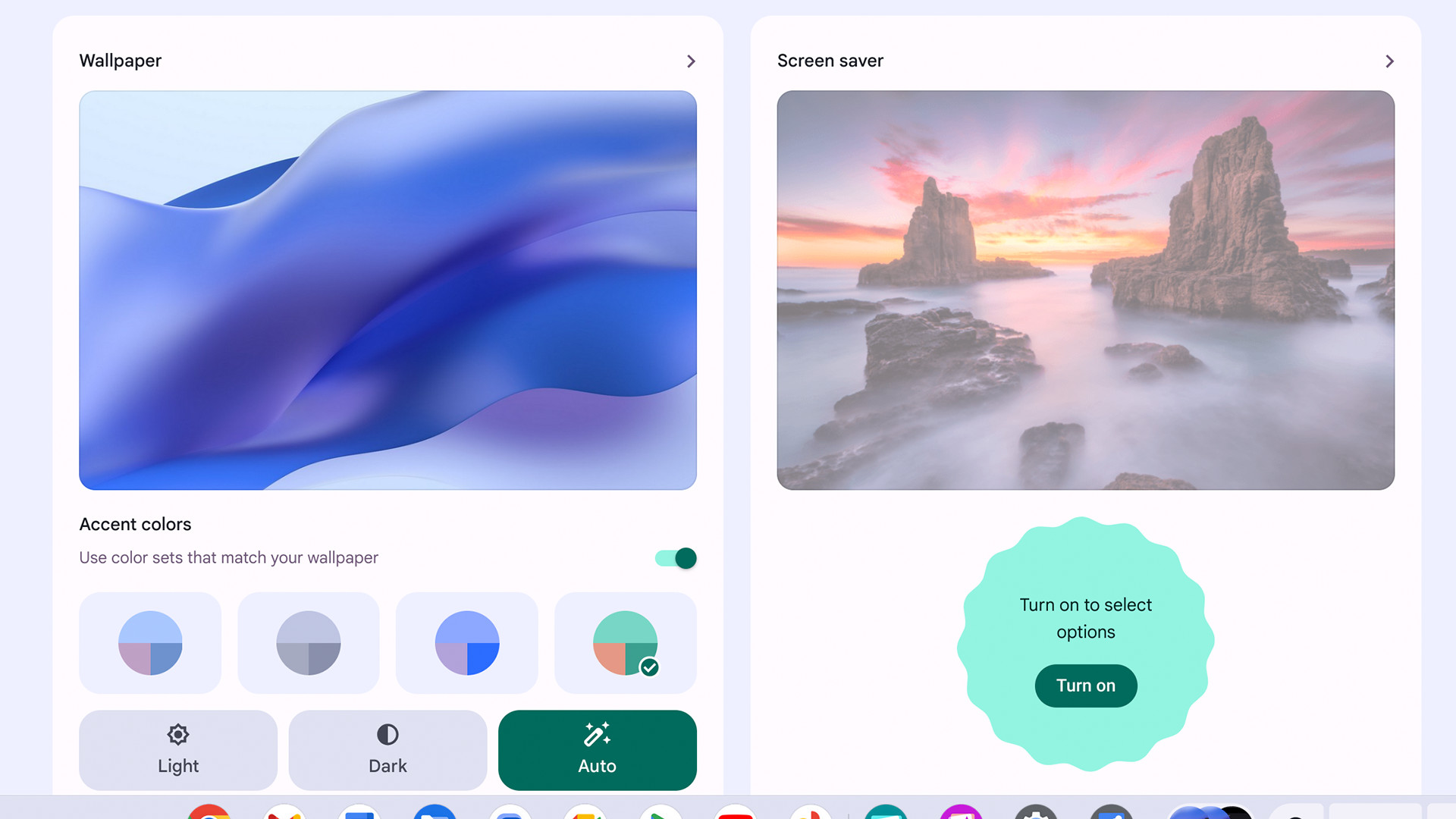
Chromebook Dynamic Color

(Image credit: Future)

Speaking of colors, the company has upgraded its Accessibility menu by adding filters for people who are color blind. There’s one for deuteranomaly to make greens stand out more. Conversely, there is a protanomaly filter to make reds more vibrant. Or you can remove all color from your Chromebook by activating the Grayscale filter.

There is one more addition in the update worth talking about and that is Adaptive Charging for power management. This slows charging speeds once the battery reaches 80 percent in order to help preserve its “health and ability to hold a charge over the lifetime of the device.” 9To5Google states not every Chromebook will receive this tool when they get the patch, and we can verify that. While our laptop got the Material You redesign, Adaptive Charging was missing.

Availability

Other notable changes in ChromeOS 117 include several security fixes, “time-lapse video recording on the Camera app”, and the ability to join video calls directly from the on-device calendar. 

It’s unknown when the rollout will be complete. Google states not every Chromebook will be “immediately eligible” for the update, but eventually, they will. Be sure to keep an eye out for the patch once it arrives. You can install it by first launching the Settings menu and then selecting “About ChromeOS” at the bottom.

If you’re looking to upgrade, we recommend checking out TechRadar’s list of the best Chromebook for 2023

You might also like


via Hosting & Support

Comments

Popular posts from this blog

Microsoft, Google, and Meta have borrowed EV tech for the next big thing in data centers: 1MW watercooled racks

Web Hosting & Remote IT Support Liquid cooling isn't optional anymore, it's the only way to survive AI's thermal onslaught The jump to 400VDC borrows heavily from electric vehicle supply chains and design logic Google’s TPU supercomputers now run at gigawatt scale with 99.999% uptime As demand for artificial intelligence workloads intensifies, the physical infrastructure of data centers is undergoing rapid and radical transformation. The likes of Google, Microsoft, and Meta are now drawing on technologies initially developed for electric vehicles (EVs), particularly 400VDC systems, to address the dual challenges of high-density power delivery and thermal management. The emerging vision is of data center racks capable of delivering up to 1 megawatt of power, paired with liquid cooling systems engineered to manage the resulting heat. Borrowing EV technology for data center evolution The shift to 400VDC power distribution marks a decisive break from legacy sy...

Google’s AI Mode can explain what you’re seeing even if you can’t

Web Hosting & Remote IT Support Google’s AI Mode now lets users upload images and photos to go with text queries The feature combines Google Gemini and Lens AI Mode can understand entire scenes, not just objects Google is adding a new dimension to its experimental AI Mode by connecting Google Lens's visual abilities with Gemini . AI Mode is a part of Google Search that can break down complex topics, compare options, and suggest follow-ups. Now, that search includes uploaded images and photos taken on your smartphone. The result is a way to search through images the way you would text but with much more complex and detailed answers than just putting a picture into reverse image search. You can literally snap a photo of a weird-looking kitchen tool and ask, “What is this, and how do I use it?” and get a helpful answer, complete with shopping links and YouTube demos. AI Eyes If you take a picture of a bookshelf, a plate of food, or the chaotic interior of your junk...

Passing the torch to a new era of open source technology

Web Hosting & Remote IT Support The practice of developing publicly accessible technologies and preventing monopolies of privately-owned, closed-source infrastructure was a pivotal technological movement in the 1990s and 2000s. The open source software movement was viewed at the time as a form of ‘digital civil duty’, democratizing access to technology. However, while the movement's ethos underpins much of today’s technological landscape, its evolution has proven to be a challenge for its pioneers. Hurdles Facing Young Developers Open source models successfully paved a path for the development of a multitude of technologies, cultivating a culture of knowledge sharing, collaboration , and community along the way. Unfortunately, monetizing such projects has always been a challenge, and ensuring contributors are compensated for their contributions working on them, even more so. On the other hand, closed-source projects offer greater control, security, and competitive advant...